

| Key Insight | Explanation |
|---|---|
| Nicotine pouches are the fastest-growing vape alternative | Tobacco-free nicotine pouches deliver controlled nicotine without vapor, smoke, or combustion, and the global market is projected to exceed $5 billion by 2028 [1]. |
| Oral fixation matters as much as nicotine | Many people vape for the hand-to-mouth ritual. Behavioral aids, flavored air devices, and chewable alternatives address this psychological component directly. |
| Not all alternatives are nicotine-based | Energy pouches, CBD pouches, herbal inhalers, and mindfulness techniques offer nicotine-free paths for those looking to quit nicotine entirely. |
| Freshness and product quality vary widely | Nicotine pouches stored in climate-controlled conditions retain flavor and potency far longer than those kept on standard warehouse shelves. |
| A step-down strategy works best | Research from the NHS and CDC suggests gradually reducing nicotine strength, rather than quitting abruptly, increases long-term success rates [2]. |
| Personalization is essential | The best alternative depends on your goals: managing cravings, replacing the habit loop, cutting nicotine, or all three. There's no single perfect option. |
Millions of people across the UK and Europe are actively searching for alternatives to vaping in 2026. Whether you're concerned about the long-term health effects of inhaling aerosolized chemicals, tired of device maintenance and e-liquid costs, or simply ready for a change, the good news is that viable options have never been more plentiful. This guide ranks and reviews the 10 best alternatives to vaping available right now, evaluating each on nicotine delivery, convenience, health profile, cost, and user satisfaction. Every recommendation is grounded in published research, real-world user feedback, and the product expertise that comes from curating over 500 tobacco-free pouches at DarePouch.

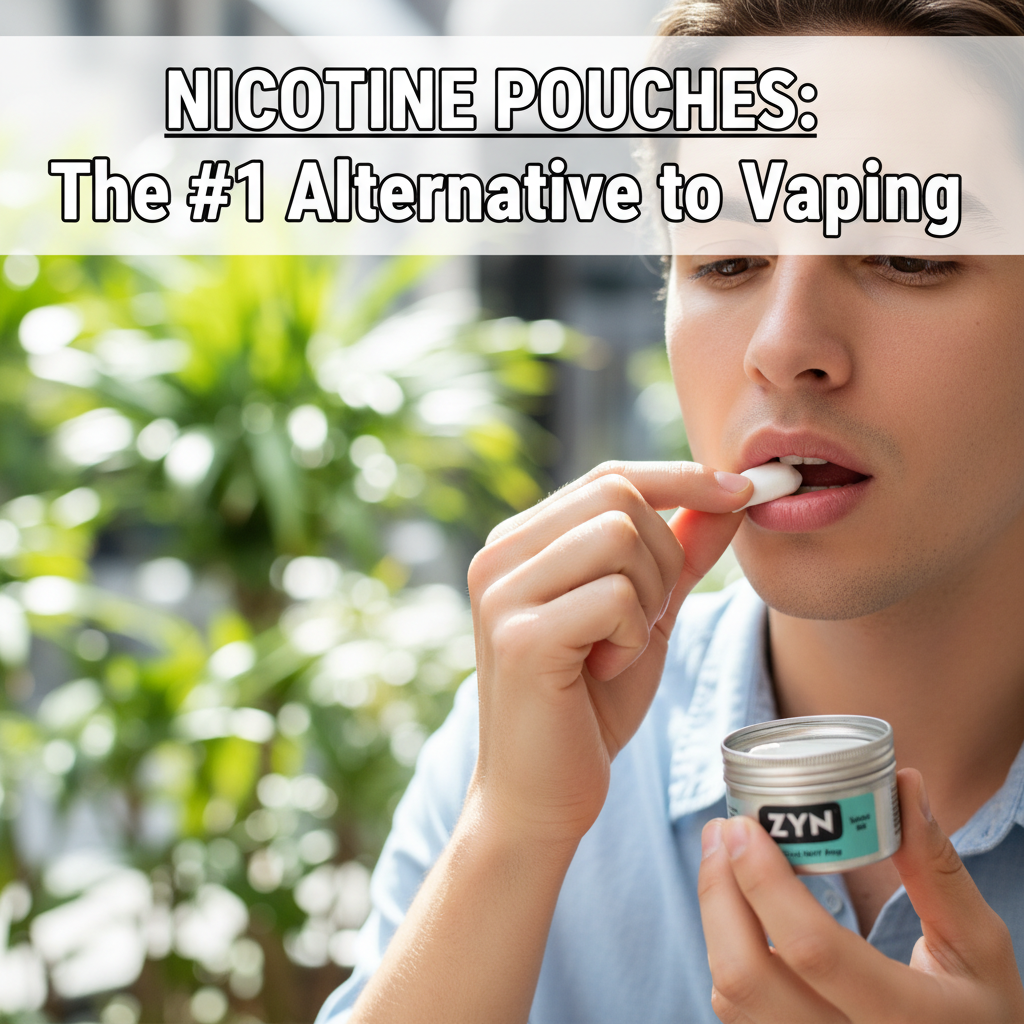
1. Tobacco-Free Nicotine Pouches — The Most Popular of All Alternatives to Vaping
Tobacco-free nicotine pouches are the most popular and fastest-growing alternative to vaping as of 2026, delivering measured doses of nicotine through the gum lining without any smoke, vapor, or tobacco leaf. The global nicotine pouch market grew by over 35% year-on-year between 2024 and 2026, according to Euromonitor International [1]. They're discreet, spit-free, and available in strengths ranging from 4mg to 50mg.
How Nicotine Pouches Work
You place a small, pre-portioned pouch between your upper lip and gum. Nicotine absorbs through the oral mucosa within minutes, providing a steady release that typically lasts 20 to 60 minutes. There's no device to charge, no liquid to refill, and no visible cloud.
Brands like ICEBERG, KILLA, PABLO, and VELO offer hundreds of flavor profiles, from classic mint and citrus to exotic mango and cola. This variety is one reason nicotine pouches have overtaken traditional nicotine gum in popularity among younger adult demographics [3].
Pros, Cons, and Who They're Best For
- Pros: No inhalation risk, completely tobacco-free, huge flavor and strength selection, extremely discreet, no secondhand exposure
- Cons: Still contain nicotine (not ideal if your goal is total nicotine cessation), can cause gum irritation at higher strengths
- Best for: Vapers who want to keep nicotine but eliminate inhalation, and anyone seeking a smoke-free, vapor-free experience
DarePouch stocks over 500 tobacco-free nicotine pouch products from 15+ premium brands, all stored in climate-controlled fridges to guarantee freshness. That's a detail most online retailers overlook. Stale pouches lose flavor and potency, so proper storage directly affects your experience.
Pro Tip: If you're transitioning from vaping, start with a nicotine pouch strength that matches your current e-liquid intake. A heavy vaper using 20mg/ml nic salts typically finds 10-14mg pouches comfortable. You can step down gradually over weeks.
2. Nicotine Replacement Therapy (NRT)
Nicotine replacement therapy is the clinically proven, FDA- and MHRA-approved method for managing nicotine withdrawal, available as patches, gums, lozenges, nasal sprays, and inhalers. Among medically supervised alternatives to vaping, NRT remains one of the most accessible. The CDC reports that NRT can double the likelihood of successfully quitting nicotine products compared to going cold turkey [2].
Types of NRT Available in 2026
- Patches: Deliver a steady, low-level dose of nicotine over 16-24 hours. Best for baseline craving management.
- Gum: Provides on-demand nicotine when cravings spike. Available in 2mg and 4mg strengths.
- Lozenges: Similar to gum but dissolve slowly in the mouth. Convenient and discreet.
- Nasal spray: Fastest nicotine delivery of all NRT forms. Prescription-only in most regions.
- Inhalers: Mimic the hand-to-mouth action of vaping or smoking. Prescription-required.
Pros, Cons, and Who They're Best For
- Pros: Backed by decades of clinical research, widely available at pharmacies, covered by some insurance plans and NHS prescriptions
- Cons: Flavors and experience are less satisfying than modern nicotine pouches, patches can cause skin irritation, gum can be tough on dental work
- Best for: People committed to full nicotine cessation who want a medically supervised step-down plan
From experience, many former vapers find NRT patches useful as a baseline but supplement them with nicotine pouches for breakthrough cravings. The combination approach is supported by NHS guidance [4].
3. Energy and Caffeine Pouches
Energy pouches are nicotine-free oral pouches that deliver caffeine, B-vitamins, and taurine through the gum lining, providing a clean energy boost without any nicotine or inhalation. They've surged in popularity throughout 2025 and 2026 as a crossover product for vapers who want to quit nicotine but keep the pouch ritual. For those exploring nicotine-free alternatives to vaping, energy pouches represent one of the most innovative options on the market.
What Makes Them Different
Unlike nicotine pouches, energy pouches contain zero nicotine. Instead, they use caffeine (typically 30-80mg per pouch) alongside amino acids and vitamins. The format is identical: a small white pouch tucked under the lip.
This makes them an excellent transitional tool. You keep the familiar oral sensation and the routine of reaching for a can of pouches, but you're no longer consuming nicotine. For many users, that behavioral continuity is the key to a successful switch.
Pros, Cons, and Who They're Best For
- Pros: Zero nicotine, provides genuine energy and focus, same discreet format as nicotine pouches, no crash like energy drinks
- Cons: Won't satisfy nicotine cravings directly, caffeine sensitivity varies, fewer flavor options than nicotine pouches
- Best for: Vapers ready to eliminate nicotine who still want an oral pouch habit, and anyone seeking a healthier energy alternative
DarePouch carries a growing selection of caffeine-based energy pouches alongside its nicotine range. Buying them together in bulk (for example, 10 cans with 15% off) lets you mix nicotine and nicotine-free pouches as part of a gradual step-down plan.
4. CBD Pouches
CBD pouches deliver cannabidiol through the oral mucosa in the same discreet pouch format, offering relaxation and stress relief without nicotine, THC, or any form of inhalation. As of 2026, the European CBD market has matured significantly, with clearer regulations and higher product standards [5]. Among alternatives to vaping that focus on relaxation rather than nicotine delivery, CBD pouches stand out for their non-addictive profile.
How CBD Pouches Support Quitting Vaping
Research published in the journal Addictive Behaviors (2024) found that CBD may reduce cue-induced cravings in nicotine-dependent individuals [6]. While CBD pouches aren't a direct nicotine replacement, they address the anxiety and restlessness that often drive people back to vaping.
The format also satisfies the oral fixation component. You get the same lip-tucking ritual without nicotine dependency.
Pros, Cons, and Who They're Best For
- Pros: Non-addictive, promotes calm and focus, zero nicotine, legal across the UK and most of Europe
- Cons: Effects are subtle (don't expect a nicotine-like buzz), product quality varies enormously between brands, some people feel no noticeable effect
- Best for: People who vape primarily for stress relief or relaxation, and those seeking a completely non-addictive alternative
DarePouch's CBD pouch selection is curated for quality and stored under the same climate-controlled conditions as its nicotine range. This matters because CBD degrades faster than nicotine when exposed to heat and light.
5. Flavored Air Devices
Flavored air devices are non-electronic, zero-nicotine tools that let you inhale scented air through a tube, mimicking the hand-to-mouth action of vaping without delivering any active substance. Brands like CAPNOS and Füm have gained traction as behavioral aids since 2024.
The Science Behind the Habit Loop
Vaping isn't just about nicotine. It's a deeply ingrained behavioral loop: reach, inhale, exhale, repeat. Research from University College London (2025) confirms that disrupting the motor habit is one of the hardest parts of quitting [7]. Flavored air devices target this specific challenge, making them unique among alternatives to vaping.
You get the physical motion, the flavored sensation on the palate, and even a visible "exhale" in cold weather. What you don't get is nicotine, tar, propylene glycol, or vegetable glycerin.
Pros, Cons, and Who They're Best For
- Pros: Zero chemicals, no battery or charging, addresses oral fixation and hand-to-mouth habit, available in many flavors
- Cons: No nicotine delivery (won't ease physical withdrawal), some users find the experience unsatisfying compared to actual vapor, ongoing cost of flavor cores
- Best for: Social vapers, light vapers with low nicotine dependence, and anyone whose primary attachment is the ritual rather than the substance
6. Herbal Chew and Dip Alternatives
Herbal chew products use plant-based ingredients like tea leaves, mint, and natural fibers to replicate the texture and mouth-feel of traditional chewing tobacco or dip, without any nicotine or tobacco. They've found a niche among former vapers who also have a history with smokeless tobacco.
What's Inside
Most herbal chews contain a base of dried tea leaves or herbal blends, sweetened with natural flavors. Some include functional ingredients like green tea extract for a mild energy lift. The experience is tactile: you pack a pinch, place it in your cheek, and chew or hold.
Pros, Cons, and Who They're Best For
- Pros: Completely nicotine-free, natural ingredients, satisfies oral fixation, widely available
- Cons: Requires spitting (unlike pouches), texture can be off-putting for those unfamiliar with dip, limited flavor innovation
- Best for: Former dual users (vaping + dip), people who prefer a more traditional oral tobacco-style experience without the tobacco
Pro Tip: If you're exploring alternatives to vaping for oral fixation specifically, tobacco-free nicotine pouches offer a similar mouth-feel to herbal chew but are spit-free and available in far more flavors and strengths. They're a cleaner, more modern option.
7. Prescription Medications
Prescription medications like varenicline (Champix/Chantix) and bupropion (Zyban) are pharmaceutical alternatives to vaping that reduce nicotine cravings by acting on brain receptors, without delivering any nicotine at all. The European Medicines Agency reauthorized varenicline supply in late 2025 after manufacturing shortages [8].
How They Work
Varenicline is a partial nicotine agonist. It binds to the same brain receptors that nicotine does, reducing both the pleasure of nicotine use and the severity of withdrawal symptoms. Bupropion, originally an antidepressant, reduces cravings through dopamine and norepinephrine modulation.
Both require a prescription and medical supervision. Treatment courses typically last 12 weeks.
Pros, Cons, and Who They're Best For
- Pros: Highest clinical success rates of any cessation method (varenicline has a 33% quit rate at 6 months according to Cochrane reviews [9]), no nicotine intake, addresses the neurochemical root of addiction
- Cons: Requires doctor's prescription, potential side effects (nausea, vivid dreams, mood changes), not suitable for everyone, supply issues in some regions
- Best for: Heavy, long-term nicotine users who've tried other methods without success, and those with strong physical dependence
8. Mindfulness and Behavioral Strategies
Mindfulness-based interventions and cognitive behavioral techniques are evidence-backed, zero-cost alternatives to vaping that help rewire the psychological triggers behind nicotine use. A 2025 meta-analysis in JAMA Network Open found that mindfulness training reduced relapse rates by 25% compared to standard counseling alone [10].
Practical Techniques That Work
- Urge surfing: When a craving hits, observe it without acting. Notice where you feel it in your body. Most cravings peak and pass within 3-5 minutes.
- Deep breathing exercises: Inhale for 4 seconds, hold for 4, exhale for 6. This activates the parasympathetic nervous system and reduces the stress that triggers cravings.
- Trigger journaling: Record every craving with its time, location, and emotional context. Patterns emerge quickly, allowing you to pre-empt high-risk moments.
- Habit stacking: Replace the vaping habit with a new micro-habit. Every time you'd normally reach for your vape, do 10 push-ups, drink a glass of water, or place a nicotine pouch instead.
Pros, Cons, and Who They're Best For
- Pros: Completely free, builds long-term resilience, addresses root psychological causes, can be combined with any other method
- Cons: Requires consistent practice, doesn't address physical nicotine withdrawal directly, harder to implement during acute craving episodes
- Best for: Everyone. These strategies work best when paired with a physical alternative like nicotine pouches or NRT.
9. Oral Fixation Substitutes
Oral fixation substitutes are simple, low-tech items like sugar-free gum, toothpicks, sunflower seeds, crunchy vegetables, and hard candy that keep your mouth busy when cravings strike. They don't deliver nicotine, but they directly address the hand-to-mouth and chewing behaviors that make vaping habitual. As budget-friendly alternatives to vaping, these everyday items are accessible to virtually everyone.
Why Oral Fixation Is So Powerful
The oral fixation component of vaping is often underestimated. According to researchers at Penn State College of Medicine (2024), the sensory and motor aspects of nicotine product use contribute independently to dependence, separate from nicotine's pharmacological effects [11]. Simply keeping your mouth occupied can reduce perceived craving intensity by up to 30%.
Best Oral Fixation Options Ranked
| Substitute | Craving Relief | Convenience | Health Impact |
|---|---|---|---|
| Sugar-free gum | Moderate | High | Positive (dental benefits) |
| Flavored toothpicks | Moderate | High | Neutral |
| Carrot/celery sticks | Low-Moderate | Low | Very positive |
| Sunflower seeds | Moderate-High | Moderate | Positive (nutrients) |
| Nicotine pouches | Very High | Very High | Reduced harm vs. vaping |
- Pros: Cheap or free, zero health risk (for most options), immediately available
- Cons: Don't address nicotine withdrawal, effects are temporary, some options (candy) add sugar and calories
- Best for: Light vapers, social vapers, and as a supplementary tool alongside nicotine pouches or NRT
10. Exercise and Physical Activity
Physical exercise is a scientifically validated alternative to vaping that reduces nicotine cravings, improves mood, and counteracts the weight gain many people fear when quitting. Even a 10-minute walk can cut craving intensity by 50%, according to a study published in the British Journal of Sports Medicine [12].
Why Exercise Works
Nicotine triggers dopamine release. So does exercise. When you remove vaping from your routine, your brain's reward system needs a new source of stimulation. Cardiovascular exercise, strength training, and even yoga fill that gap by boosting endorphins, serotonin, and dopamine naturally.
The effect isn't just biochemical. Exercise also provides structure, reduces stress, improves sleep quality, and gives you a tangible sense of progress. These are all factors that support long-term behavior change.
Pros, Cons, and Who They're Best For
- Pros: Massive overall health benefits, free (walking, bodyweight exercises), proven craving reduction, improves lung recovery after quitting vaping
- Cons: Doesn't directly replace nicotine, requires motivation and consistency, not always feasible in the moment a craving hits
- Best for: Everyone quitting vaping, especially as a complement to nicotine pouches, NRT, or prescription medications

How to Choose the Right Alternative to Vaping in 2026
The best alternative to vaping depends on three factors: your nicotine dependence level, your primary reason for vaping, and your quit goal. No single product works for everyone, and the most successful quitters typically combine two or three alternatives to vaping for maximum effectiveness.
A Decision Framework
Ask yourself these questions:
- Do you want to keep nicotine or quit it entirely? If you want nicotine without inhalation, tobacco-free nicotine pouches are the top choice. If you want zero nicotine, consider energy pouches, CBD pouches, or flavored air devices.
- Is the hand-to-mouth habit a major trigger? Flavored air devices and oral fixation substitutes address this directly. Nicotine pouches satisfy oral fixation too, without the hand-to-mouth motion.
-
Have you tried quitting before and relapsed? Talk to your doctor about varenicline. Combine
Recommended Articles
Explore more from our content library:


