| Key Insight | Explanation |
|---|---|
| FDA-approved aids double your odds | Nicotine replacement therapy and prescription medications can double or even triple your chance of quitting successfully compared to willpower alone [1]. |
| Tobacco-free nicotine pouches are rising | As of 2026, tobacco-free nicotine pouches have become one of the fastest-growing quit smoking aids, offering controlled nicotine delivery without combustion or tobacco leaf. |
| Combination therapy works best | Research consistently shows that pairing a long-acting NRT (like a patch) with a short-acting product (like pouches or lozenges) yields the highest quit rates [2]. |
| Behavioral support matters | Quit smoking aids are most effective when combined with behavioral counseling, support apps, or structured programs like the CDC's Tips From Former Smokers [3]. |
| Gradual nicotine step-down prevents relapse | Stepping down nicotine strength over weeks (e.g., from 20mg to 6mg pouches) helps your body adjust without the shock of cold-turkey withdrawal. |
| Freshness and product quality affect outcomes | Stale or improperly stored nicotine products deliver inconsistent nicotine, undermining your quit plan. Climate-controlled storage ensures reliable performance. |
Introduction: Why Quit Smoking Aids Matter in 2026
Quit smoking aids are products, therapies, and strategies designed to help smokers overcome nicotine addiction and stop using combustible tobacco. They range from FDA-approved nicotine replacement therapies to modern tobacco-free nicotine pouches, prescription medications, and behavioral support programs. In 2026, they remain the single most effective way to break free from cigarettes.
Smoking still kills more than 480,000 Americans each year, according to the CDC's Tips From Former Smokers campaign [3]. Globally, the toll exceeds 8 million. Yet quitting cold turkey has a success rate below 5%. That's where quit smoking aids change the equation. FDA-approved cessation products can double your chances of quitting successfully [1], and newer options like tobacco-free nicotine pouches give you even more flexibility.
This guide walks you through a practical, step-by-step process to quit smoking using the best aids available as of 2026. You'll learn how to assess your dependence, pick the right products, build a quit plan, manage cravings, and taper off nicotine over time. Expect to spend about 15 minutes reading this guide, and roughly 8 to 12 weeks executing the plan. Difficulty level? Moderate. But with the right tools, completely achievable.
What You'll Need Before You Start
Successful smoking cessation requires preparation, not just motivation. Before choosing your quit smoking aids, you'll need a clear picture of your nicotine dependence, access to the right products, and a support system you can rely on.
Essential Tools and Resources
Gathering the right supplies before your quit date dramatically improves your odds. Here's what you should have ready:
- Nicotine replacement products: Patches, nicotine pouches, gums, or lozenges. Tobacco-free nicotine pouches (available in strengths from 4mg to 50mg) offer discreet, smoke-free nicotine delivery.
- A quit date: Pick a specific day within the next two weeks. Write it down.
- A tracking app or journal: Tools like Smokefree.gov's SmokefreeTXT program [4] help you log cravings and celebrate milestones.
- Behavioral support: Whether it's a quitline (1-800-QUIT-NOW), a counselor, or an online community, having human support matters.
- A healthcare provider consultation: If you smoke more than 10 cigarettes daily, discuss prescription options like varenicline (Chantix) or bupropion (Wellbutrin) with your doctor [5].
Knowledge Prerequisites
You don't need a medical degree, but understanding a few basics helps. Know your Fagerström score (a quick self-assessment of nicotine dependence). Understand that nicotine itself, while addictive, isn't the primary carcinogen in cigarettes. It's the combustion and tar that cause cancer [6]. This distinction matters because it explains why nicotine replacement therapies and tobacco-free pouches are dramatically safer than continuing to smoke.
Pro Tip: Stock up on at least two weeks' worth of nicotine pouches or NRT products before your quit date. Running out mid-plan is one of the top reasons people relapse. DarePouch offers same-day dispatch and bulk deals (buy 10 cans, get 15% off), so you won't be caught short.
Step 1: Assess Your Smoking Habits and Nicotine Dependence
Assessing your current smoking habits tells you exactly which quit smoking aids will work best for your body and lifestyle. Without this step, you're guessing, and guessing leads to relapse.
How to Measure Your Dependence Level
The Fagerström Test for Nicotine Dependence is a six-question assessment used by clinicians worldwide. It takes under two minutes. Your score (0 to 10) determines whether you need mild, moderate, or strong nicotine replacement.
- Count how many cigarettes you smoke per day. Fewer than 10 suggests low dependence; more than 20 indicates high dependence.
- Note how soon after waking you light your first cigarette. Within 5 minutes? That's a strong indicator of heavy dependence [7].
- Track which cigarettes feel hardest to skip (the morning one is usually the most critical).
- Record your triggers: stress, meals, social settings, boredom, or alcohol.
Matching Your Score to the Right Aid
| Fagerström Score | Dependence Level | Recommended Starting Aid | Suggested Nicotine Strength |
|---|---|---|---|
| 0–3 | Low | Nicotine gum, low-strength pouches | 4mg–6mg |
| 4–6 | Moderate | Nicotine patch + pouches (combo) | 10mg–14mg |
| 7–10 | High | High-strength patch + pouches, or prescription medication | 14mg–20mg+ |
From experience, most people underestimate their dependence level. Be honest with yourself. A higher starting nicotine strength in your quit smoking aids isn't a failure. It's a strategy that prevents the brutal withdrawal symptoms that send people back to cigarettes within 48 hours.
Step 2: Choose the Right Quit Smoking Aid for Your Lifestyle
Choosing the right quit smoking aid means matching the product to your daily routine, your triggers, and your comfort level with different delivery methods. There's no single "best" option. The best aid is the one you'll actually use consistently.
Overview of Available Quit Smoking Aids in 2026
The landscape of cessation products has expanded significantly. Here are the main categories, as outlined by the American Cancer Society's guide to nicotine replacement therapy:
- Nicotine patches: Provide steady, background nicotine over 16 or 24 hours. Great for baseline craving control but slow to act during sudden urges [2].
- Nicotine gum and lozenges: Fast-acting, oral nicotine delivery. Good for acute cravings but can cause jaw soreness or hiccups.
- Tobacco-free nicotine pouches: Placed between the gum and lip, these deliver nicotine within minutes without tobacco, smoke, or vapor. Available in a wide range of strengths (4mg to 50mg) and flavors. They've become one of the most popular quit smoking aids in 2026 due to their discretion and convenience.
- Nicotine nasal spray and inhaler: Prescription-only in most regions. Fast-acting but can irritate nasal passages or throat [5].
- Prescription medications: Varenicline (Chantix) blocks nicotine receptors in the brain. Bupropion (Wellbutrin) reduces cravings and withdrawal. Both require a doctor's prescription [1].
- CBD pouches: Non-nicotine pouches containing cannabidiol, which some users find helpful for managing the anxiety and restlessness associated with quitting.
- Energy/caffeine pouches: Nicotine-free pouches that provide a mild stimulant effect, useful for those who miss the "pick-me-up" feeling of a cigarette.
Which Aid Fits Which Lifestyle?
Office workers often prefer pouches because they're invisible and spit-free. Active individuals might favor patches for hands-free, all-day coverage. Heavy smokers (20+ per day) typically benefit from combination therapy: a patch for baseline plus pouches for breakthrough cravings [8]. The Mayo Clinic confirms that combination NRT outperforms single-product use [5].
Industry analysts suggest that tobacco-free nicotine pouches are increasingly preferred over traditional NRT by younger adults (ages 25–44) because of the variety of flavors, the absence of tobacco, and the social discretion they offer.
Step 3: Build a Personalized Quit Plan with a Target Date
Building a quit plan with a specific target date turns your intention into a commitment. Research from the American Lung Association shows that smokers who set a quit date are significantly more likely to follow through than those who plan to "cut back eventually" [7].
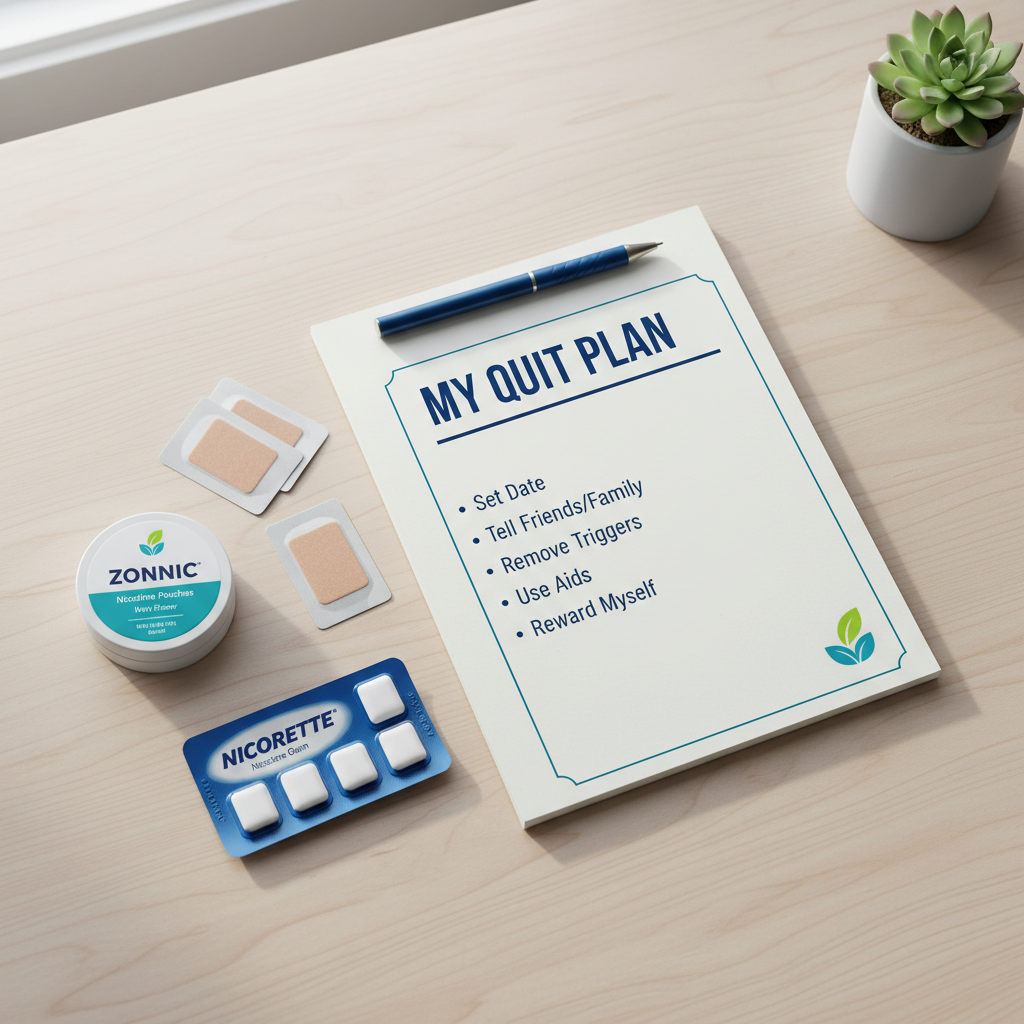
How to Structure Your Plan
- Pick a quit date within the next 7 to 14 days. Avoid high-stress periods (moving, deadlines, holidays).
- Write down your top three reasons for quitting. Keep them visible: phone wallpaper, sticky notes, wherever you'll see them daily.
- Identify your top five smoking triggers and plan a specific alternative for each one (e.g., "after meals, I'll use a mint-flavored nicotine pouch instead of stepping outside").
- Tell at least three people about your quit date. Social accountability is a proven motivator.
- Remove all cigarettes, lighters, and ashtrays from your home, car, and workspace the night before your quit date.
Pre-Quit Preparation Checklist
In the week before your quit date, take these practical steps:
- Stock your quit smoking aids. If you're using nicotine pouches, order enough for at least 2–3 weeks. DarePouch stores all pouches in climate-controlled fridge storage, ensuring guaranteed freshness, so the nicotine content is reliable from the first pouch to the last.
- Download a quit-tracking app (Smokefree.gov offers free tools [4]).
- Schedule a check-in with your doctor if you're using prescription aids.
- Practice your craving-response techniques: deep breathing, 5-minute walks, or reaching for a pouch.
Pro Tip: Many people find it helpful to start wearing a nicotine patch or using pouches a few days before their quit date while still smoking. This "pre-loading" strategy, supported by some clinical studies, can ease the transition by reducing the satisfaction you get from cigarettes before you fully stop.
Step 4: Start Your Nicotine Replacement or Prescription Therapy
Starting your NRT or prescription medication on your quit date (or slightly before) is the single most impactful action you'll take. This is the moment your quit smoking aids begin doing the heavy lifting.
How to Begin NRT Correctly
- Apply a nicotine patch to clean, dry, hairless skin first thing in the morning on your quit date. Rotate the placement site daily to avoid irritation [2].
- Keep fast-acting aids (pouches, gum, or lozenges) within arm's reach for breakthrough cravings. Aim to use them proactively, before a craving peaks, not after you're already desperate.
- Follow the dosing schedule on the product packaging. For pouches, start with a strength that matches your Fagerström assessment from Step 1.
- Record each use in your tracking app or journal. This data will guide your taper-down schedule later.
Prescription Medication Protocols
If your doctor prescribed varenicline, you'll typically start it one to two weeks before your quit date. The medication gradually reduces the pleasure you get from nicotine [1]. Bupropion follows a similar pre-quit timeline. Neither should be combined with each other without medical supervision, but both can be used alongside NRT products like patches or pouches.
The FDA notes that approved cessation products are safe and effective for most adults, including those with chronic health conditions [1]. If you experience side effects (nausea with varenicline is common), contact your healthcare provider rather than stopping abruptly.
From experience, the first 72 hours are the hardest. Nicotine withdrawal peaks around day three. Having your quit smoking aids ready and accessible isn't optional. It's essential. Keep pouches in your pocket, your desk drawer, your nightstand, and your car.
Step 5: Manage Cravings with Fast-Acting Tobacco-Free Pouches
Managing acute cravings is the make-or-break skill of any quit attempt. Tobacco-free nicotine pouches deliver nicotine to the bloodstream within 2 to 5 minutes, making them one of the fastest-acting quit smoking aids available without a prescription.
How Nicotine Pouches Work as Cessation Tools
Nicotine pouches sit between your upper lip and gum. The nicotine absorbs through the oral mucosa directly into the bloodstream. There's no smoke, no vapor, no tobacco leaf, and no spit. This makes them usable anywhere: offices, airplanes, restaurants, even hospitals.
The key advantage over gum or lozenges? Pouches don't require chewing or dissolving. You place one and forget it for 20 to 45 minutes. Research from MD Anderson Cancer Center confirms that oral nicotine products are effective tools for managing cravings during cessation [8].
- Identify the craving early. Don't wait until you're reaching for a lighter. The moment you think about a cigarette, place a pouch.
- Select the appropriate strength. If you're in your first two weeks, match or slightly exceed your usual nicotine intake to prevent withdrawal.
- Use a pouch every 1 to 2 hours during waking hours in the first week, then gradually extend the interval.
- Pair each pouch with a behavioral redirect: a glass of water, a short walk, or a breathing exercise.
Why Product Freshness Matters
Stale nicotine pouches lose potency. If your pouch delivers 30% less nicotine than labeled because it's been sitting in a warm warehouse, your craving management fails. This is why storage conditions matter more than most people realize. DarePouch keeps its entire inventory of 500+ products in climate-controlled fridge storage, a practice that standard online retailers don't follow. The result: every pouch delivers the nicotine strength printed on the can.
With brands like VELO, ICEBERG, KILLA, and PABLO available across strengths from 4mg to 50mg, you can find the exact product that matches your cessation stage. That kind of selection (400+ products across 15+ brands) simply isn't available at most pharmacies or convenience stores.
Step 6: Taper Down Your Nicotine Strength Gradually
Tapering your nicotine intake over 8 to 12 weeks is the strategy that turns short-term abstinence into permanent freedom. Abrupt nicotine cessation after using NRT causes unnecessary withdrawal and increases relapse risk.
A Practical Taper Schedule
The American Cancer Society recommends a step-down approach for NRT [2]. Here's how to apply that principle with nicotine pouches:
| Week | Pouch Strength | Pouches Per Day | Notes |
|---|---|---|---|
| 1–2 | High (14mg–20mg) | 8–12 | Focus on zero cigarettes. Don't worry about pouch count yet. |
| 3–4 | Medium (10mg–14mg) | 6–10 | Begin extending time between pouches to 2–3 hours. |
| 5–8 | Low (6mg–10mg) | 4–6 | Introduce CBD or energy pouches as occasional substitutes. |
| 9–12 | Minimal (4mg–6mg) | 2–4 | Use only for strong cravings. Most of the day should be pouch-free. |
| 12+ | Nicotine-free (CBD/energy) | As needed | Oral habit satisfied without any nicotine. |
Why Gradual Beats Cold Turkey
Cold turkey has a success rate under 5%. The NHS recommends using stop-smoking products for at least 8 to 12 weeks [6]. Gradual tapering works because it lets your brain's nicotine receptors slowly downregulate. You feel less withdrawal, fewer mood swings, and less of the irritability that ruins quit attempts.
Having access to multiple nicotine strengths from a single source makes tapering practical. If you can only find one or two strengths at your local store, stepping down becomes a guessing game. This is where a marketplace with 500+ products across the full strength spectrum proves its value.
Step 7: Reinforce Progress with Behavioral Support and Tracking
Reinforcing your progress with behavioral support and consistent tracking transforms a quit attempt into a permanent lifestyle change. Quit smoking aids handle the physical side. Behavioral tools handle the psychological side.
Proven Support Systems
- Quitlines: Call 1-800-QUIT-NOW (US) or contact the NHS Stop Smoking Service (UK). Free, confidential, and staffed by trained counselors [3].
- Digital programs: Smokefree.gov offers text-based support (SmokefreeTXT), apps, and online resources tailored to different demographics [4].
- Structured programs: The American Lung Association's Freedom From Smoking program uses evidence-based group sessions and is available online as of 2026 [7].
- Peer communities: Online forums and social media groups provide 24/7 support from people who understand exactly what you're going through.
Tracking Your Wins
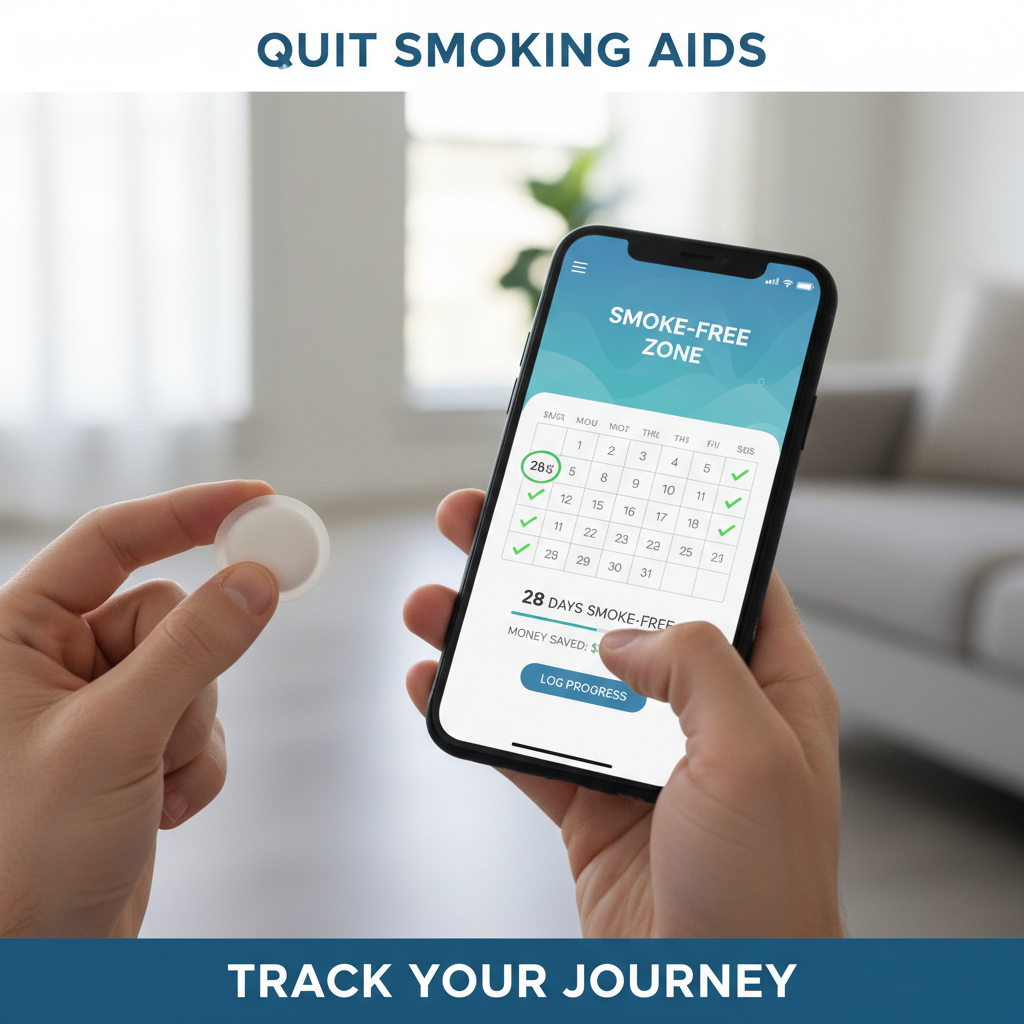
- Log every smoke-free day. Streak tracking is a powerful psychological motivator.
- Record your craving intensity on a 1–10 scale each day. You'll see the numbers drop over weeks, which reinforces that the process is working.
- Calculate money saved. A pack-a-day smoker in the UK saves roughly £4,000 per year. In the US, the figure exceeds $3,000.
- Note health improvements: better breathing within 72 hours, improved taste and smell within a week, reduced cough within a month [3].
Research from SAMHSA (Substance Abuse and Mental Health Services Administration) emphasizes that combining medication with counseling produces the best outcomes for substance use cessation [9]. This principle applies directly to smoking. Your quit smoking aids are the medication. Behavioral support is the counseling. Together, they're significantly more effective than either alone.
Common Mistakes to Avoid
Most quit attempts fail not because the aids don't work, but because of avoidable mistakes in how people use them. Here are the pitfalls that derail even motivated quitters.
Product-Related Mistakes
- Underdosing nicotine: Choosing too low a strength "to be safe" leads to inadequate craving control and relapse. Match your starting dose to your actual dependence level.
- Using only one type of aid: A patch alone won't handle sudden cravings. Combination therapy (patch + pouches or gum) is the gold standard [5].
- Stopping NRT too early: Most guidelines recommend 8–12 weeks minimum. Cutting it short at 3–4 weeks is a recipe for relapse [2].
-
Buying stale products: Nicotine degrades with heat and time. Always purchase from retailers that guarantee freshness through proper storage
Recommended Articles
Explore more from our content library: