

| Key Insight | Explanation |
|---|---|
| Set a quit date in advance | Choosing a specific date 1-2 weeks out gives you time to prepare mentally and remove triggers from your environment before day one. |
| Nicotine replacement helps significantly | Switching to a tobacco-free nicotine alternative — like nicotine pouches — can ease cravings without the harmful chemicals in vape aerosol. |
| Withdrawal peaks at 72 hours | Most physical withdrawal symptoms — irritability, cravings, difficulty concentrating — peak around 72 hours and then gradually subside over 2-4 weeks. |
| Identify your triggers first | Stress, boredom, social situations, and specific routines are the most common vaping triggers. Mapping them before quitting dramatically improves success rates. |
| Cold turkey works for some, not all | Quitting abruptly is effective for highly motivated individuals, but a gradual step-down approach using nicotine replacement tends to have higher long-term success rates. |
| Relapse is part of the process | Research shows most people require multiple quit attempts before succeeding. A single relapse doesn't mean failure — it means you need a revised strategy. |
Quitting vaping is harder than most people expect — and easier than most people fear. If you've been searching for a clear, honest answer on how to quit vaping, you're in the right place. This guide walks you through every stage of the process: from setting a quit date to managing cravings, choosing nicotine alternatives, and dealing with relapse without losing momentum. No fluff, no guilt trips — just a practical roadmap that reflects what the evidence actually says. Whether you're planning to quit cold turkey, step down gradually, or switch to a tobacco-free alternative, the steps below apply. Expect to spend 10 minutes reading this guide and several weeks applying it.
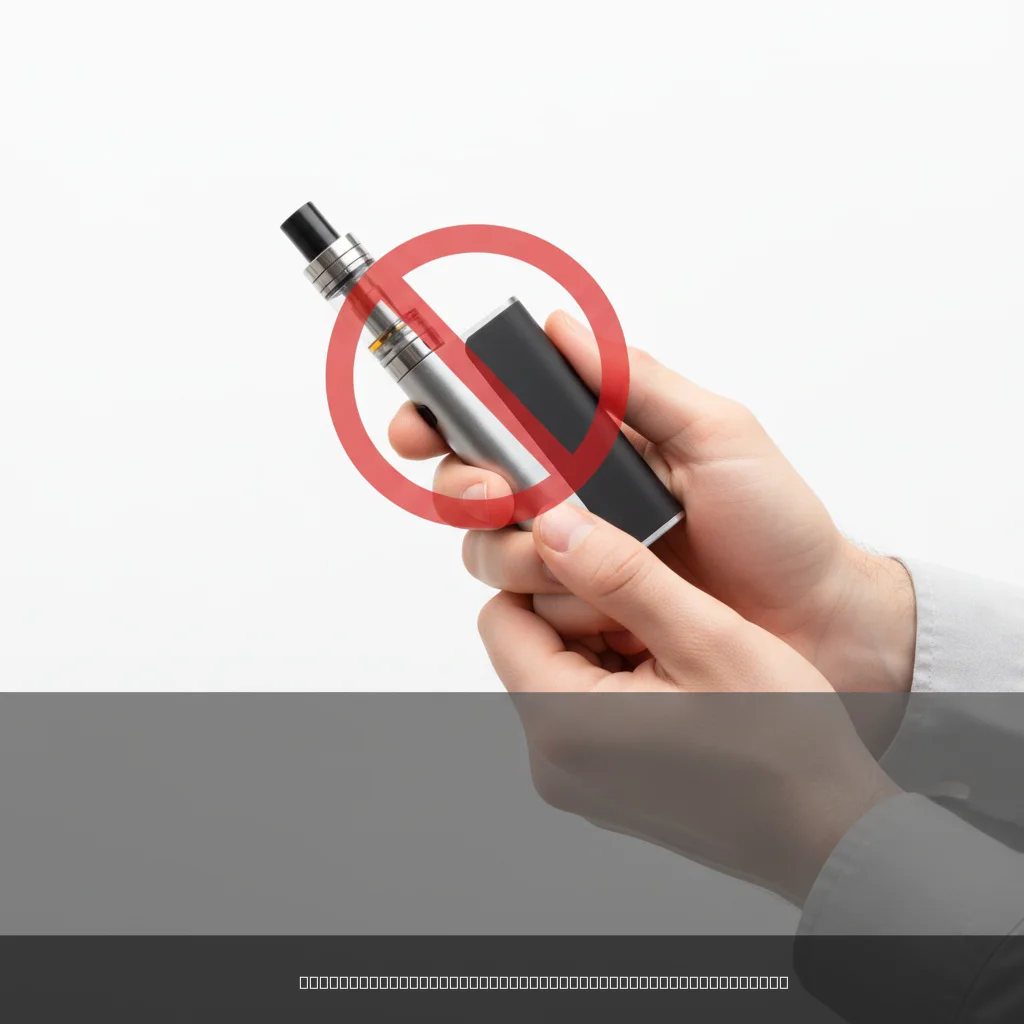
What You Need to Know Before You Quit
Vaping delivers nicotine — a highly addictive substance — through aerosol inhalation, making the habit both physically and psychologically reinforcing. Understanding what you're dealing with before you try to quit is the difference between a plan that sticks and one that collapses at the first craving.
The Nicotine Dependence Cycle
Nicotine dependence (physical reliance on nicotine to function normally) develops quickly with regular vaping. Most modern vapes deliver nicotine in the form of nicotine salts, which absorb faster into the bloodstream than the freebase nicotine in traditional cigarettes [1]. That speed of absorption accelerates dependence.
The cycle works like this:
- Nicotine binds to receptors in the brain, releasing dopamine and creating a brief sense of reward or calm
- As nicotine levels drop, withdrawal symptoms begin — irritability, restlessness, difficulty concentrating
- Vaping again relieves those symptoms, reinforcing the behavior
- Over time, the brain requires nicotine simply to feel baseline normal
Breaking that cycle requires addressing both the physical dependence and the behavioral habits that surround it.
What the Research Says About Success Rates
According to the American Lung Association, most people make multiple quit attempts before succeeding long-term [2]. That's not a reason to feel discouraged — it's a reason to treat each attempt as data rather than failure.
A few things worth knowing before you start:
- Quitting without any support has a lower success rate than quitting with behavioral counseling or nicotine replacement therapy (NRT)
- Combination approaches — for example, NRT plus behavioral support — consistently outperform single-method attempts
- Stress is the number-one trigger for relapse, which means stress management isn't optional — it's core to your plan
Pro Tip: Before your quit date, spend three days logging every time you vape — the time, your mood, and what you were doing. This creates a trigger map that makes Steps 2 and 3 far more effective.
Step 1: Set Your Quit Date and Build a Plan
Setting a quit date 1-2 weeks in advance gives you a concrete commitment point and enough time to prepare your environment, choose your quit method, and build your support network before day one arrives.
How to Choose the Right Date
Don't pick a date that falls during a high-stress period — a major work deadline, a holiday, or a social event where you know you'll be tempted. Choose a date that gives you a relatively clear week ahead. According to Smokefree.gov, having a specific quit date significantly improves quit outcomes compared to vague intentions to "quit soon" [3].
- Write the date down — put it in your phone, on a sticky note, wherever you'll see it daily
- Tell at least one person — social accountability raises your commitment level
- Remove vaping equipment — on or before your quit date, dispose of your device, pods, and e-liquid
- Stock your alternatives — have your chosen NRT or replacement product ready before day one
- Plan your first 72 hours — the hardest window; schedule activities that keep you occupied and away from your usual vaping spots
A common mistake here is setting a quit date and doing nothing else. The date is just an anchor. The preparation around it is what actually determines whether day one is survivable.
| Preparation Task | When to Do It | Why It Matters |
|---|---|---|
| Log your vaping triggers | 3-7 days before quit date | Identifies patterns so you can plan responses |
| Choose your quit method | 1 week before | Cold turkey vs. NRT vs. step-down requires different prep |
| Order or purchase NRT/alternatives | 3-5 days before | Ensures you have them on hand from day one |
| Remove all vaping equipment | On quit date | Removes the easiest route back to vaping |
| Tell friends/family | Before quit date | Creates social accountability and reduces social triggers |
Step 2: Identify and Map Your Vaping Triggers
Vaping triggers are the specific situations, emotions, or habits that prompt you to reach for your device — and mapping them before quitting is one of the highest-leverage actions you can take.
The Four Main Trigger Categories
Most vaping triggers fall into one of four categories:
- Emotional triggers: Stress, anxiety, boredom, loneliness, or frustration
- Situational triggers: Specific places (your car, a break room, outside a bar) or times of day (first thing in the morning, after meals)
- Social triggers: Being around other vapers or smokers, drinking alcohol, certain social groups
- Habitual triggers: Automatic routines where vaping was embedded — finishing a meal, opening your laptop, watching TV
According to the Texas Department of State Health Services, identifying personal triggers and planning specific responses to each one is a core component of successful quit strategies [4].
How to Create Your Trigger Map
- Track for 3 days: Every time you vape, note the time, your emotional state, your location, and what you were doing immediately before
- Identify the top 3-5 recurring triggers: Look for patterns — most people have 3-5 dominant triggers that account for the majority of their vaping
- Write a specific response for each: For example, "When I feel stressed at work, I'll take a 5-minute walk instead of reaching for my vape"
- Plan substitutes in advance: Cold water, sugar-free gum, a nicotine pouch, deep breathing — have a specific tool ready for each trigger
In practice, skipping this step is one of the most common reasons people relapse in the first week. They quit the device but keep the triggers — and have no plan for what to do when they hit.
Step 3: Choose Your Quit Method (How to Quit Vaping That Actually Works)
There are three main approaches to quitting vaping: cold turkey, gradual step-down, and nicotine replacement therapy (NRT). Each has real trade-offs, and the right choice depends on your nicotine dependence level, your lifestyle, and your history with previous quit attempts.
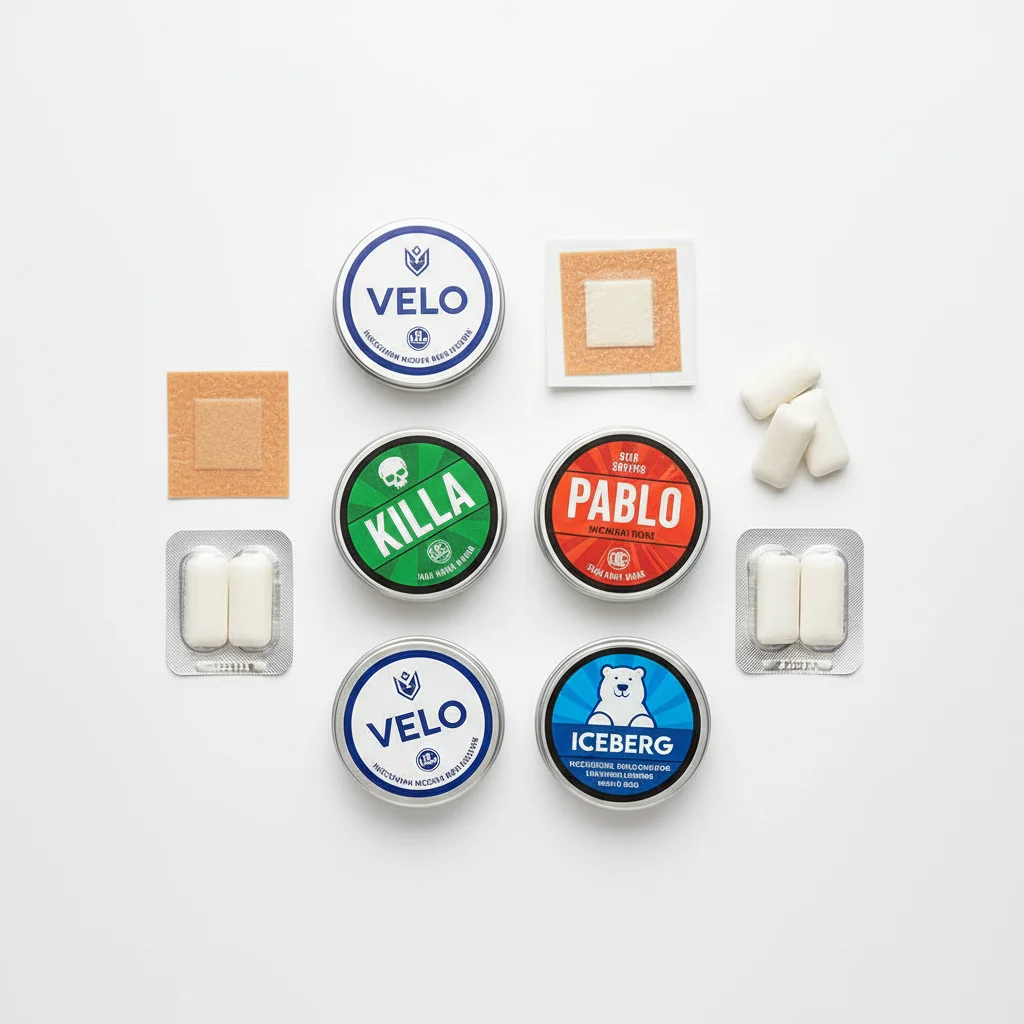
Comparing the Three Main Quit Methods
| Method | How It Works | Best For | Key Limitation |
|---|---|---|---|
| Cold turkey | Stop completely on quit date with no NRT | Highly motivated individuals; lower dependence | Intense withdrawal; higher short-term relapse rate |
| Gradual step-down | Reduce nicotine strength or frequency over weeks | Heavy vapers; those who've failed cold turkey | Requires discipline; easy to stall at a comfortable level |
| Nicotine Replacement Therapy (NRT) | Switch to patches, gum, lozenges, or nicotine pouches | Most vapers; especially those with high dependence | Doesn't address behavioral habits on its own |
Why Nicotine Pouches Are a Practical NRT Option
The NHS recommends switching to another fast-acting nicotine product as one of the most effective strategies for quitting vaping [5]. Nicotine pouches — small, tobacco-free pouches placed under the lip — deliver nicotine without smoke, aerosol, or combustion.
For someone stepping down from vaping, the key advantage of nicotine pouches is control. You choose the strength — from 4mg for light users up to 20mg or more for heavy ones — and you can reduce that strength incrementally over time. Brands like ZYN, VELO, and Nordic Spirit offer multiple strength tiers specifically designed to support this kind of step-down approach.
At DarePouch, we've found that customers transitioning from vaping tend to start at 8mg-12mg pouches and step down to 4mg-6mg over 4-8 weeks before eventually stopping. Results vary depending on individual dependence levels, but this pattern is consistent enough to serve as a useful starting framework.
Pro Tip: If you're switching from vaping to nicotine pouches as a step-down tool, match your pouch strength to your current vape's nicotine level first — then reduce by one strength tier every 2-3 weeks. Don't start too low; a pouch that doesn't satisfy cravings will push you back to your vape.
Step 4: Manage Withdrawal Symptoms Day by Day
Nicotine withdrawal symptoms are real, predictable, and temporary — and knowing the timeline in advance makes them significantly more manageable.
The Withdrawal Timeline
According to Mass General Brigham, nicotine withdrawal typically follows a predictable pattern [6]:
- Hours 1-24: Cravings begin, mild irritability, some anxiety
- Hours 24-72: Peak withdrawal — strongest cravings, difficulty concentrating, mood swings, possible headaches or sleep disruption
- Days 4-7: Physical symptoms begin to ease; psychological cravings continue
- Weeks 2-4: Physical dependence largely resolved; behavioral triggers remain the main challenge
- Month 2 onward: Cravings become infrequent and shorter in duration
Practical Strategies for Each Withdrawal Phase
The first 72 hours are the hardest. Plan for them specifically:
- Keep your hands busy: Fidget tools, stress balls, or even just typing help interrupt the habitual hand-to-mouth motion
- Use the 4-7-8 breathing technique: Inhale for 4 counts, hold for 7, exhale for 8 — this activates the parasympathetic nervous system and reduces acute anxiety within minutes
- Exercise: Even a 10-minute walk reduces craving intensity. The Texas DSHS specifically recommends physical activity as a craving management tool [4]
- Stay hydrated: Nicotine withdrawal can cause headaches partly from dehydration — drink more water than usual during the first week
- Avoid alcohol in week one: Alcohol is a strong social trigger and lowers inhibition, making it much harder to resist cravings
- Use NRT as needed: If you've chosen nicotine pouches or patches, use them proactively rather than waiting until cravings are unbearable
The Truth Initiative notes that text-based quit support programs — where you receive daily check-in messages and coping tips — significantly improve quit rates, particularly in the first two weeks [7]. Their EX Program, developed with Mayo Clinic, is one well-validated option available online.
Pro Tip: Cravings typically last 3-5 minutes. When one hits, set a timer for 5 minutes and commit to doing one specific activity — a walk, a glass of water, a quick stretch — before deciding whether you still need to vape. Most cravings pass before the timer ends.
Step 5: Build Your Support System
Quitting vaping alone is possible, but having structured support — whether from people, apps, or professional resources — meaningfully improves your odds of long-term success.
Personal and Social Support
Tell the people around you that you're quitting. This isn't just about accountability — it's about managing your environment. People who know you're quitting are less likely to offer you a hit, and more likely to help you avoid situations that would tempt you.
- Ask a friend or partner to be your designated "call when craving" contact
- If others in your household vape, discuss boundaries — having devices around makes quitting harder
- Consider online communities (Reddit's r/quittingvaping, for example) for peer support from people in the same process
Digital and Professional Resources
Several free, evidence-based tools are available as of 2026:
- quitSTART app — free app from Smokefree.gov with personalized quit plans, craving management tools, and progress tracking [1]
- SmokefreeTXT — text message quit support program; sign up at Smokefree.gov or text QUIT to 47848
- EX Program — developed with Mayo Clinic, available through Truth Initiative; combines personalized quit plans with 24/7 online community access [7]
- Your GP or pharmacist — in the UK and across Europe, healthcare providers can prescribe varenicline (Champix) or bupropion, both of which have clinical evidence supporting their use in nicotine cessation
Industry analysts consistently note that combination approaches — behavioral support plus pharmacological or NRT-based intervention — produce the highest long-term quit rates. Using just one method is better than nothing, but combining two or more is better still.
Step 6: Handle Relapse Without Giving Up
Relapse is common and does not mean your quit attempt has failed — it means you've gathered information about which situations and strategies need adjustment.
Understanding the Relapse Pattern
The CDC acknowledges that most people who successfully quit nicotine do so after multiple attempts [8]. A single slip — one vape hit at a party, for example — is categorically different from returning to daily vaping. The key is to treat the slip as a data point rather than a verdict.
Ask yourself:
- What triggered the relapse? (stress, alcohol, a specific social situation?)
- Was your NRT or alternative not strong enough to manage the craving?
- Were you under-prepared for that specific situation?
- Did you have a response plan ready — and if not, what would that plan look like now?
Getting Back on Track
- Don't catastrophize: One slip doesn't erase your progress — nicotine dependence rebuilds slowly, not instantly
- Set a new quit date immediately: The longer the gap between a relapse and a new attempt, the harder it becomes to restart
- Adjust your strategy: If cold turkey didn't work, try NRT. If NRT alone wasn't enough, add behavioral support. If one strength of nicotine pouch wasn't satisfying enough, try a slightly higher one before stepping down
- Review your trigger map: Add the relapse situation to it and build a specific response plan for next time
From experience working with customers who've transitioned from vaping to nicotine pouches, the most common reason for relapse isn't lack of willpower — it's under-preparation for a specific high-risk situation. The fix is almost always a more specific plan, not more motivation.
Common Mistakes to Avoid
Knowing what typically goes wrong is as useful as knowing what to do right. These are the most common errors that derail quit attempts.
The Biggest Pitfalls
- Keeping your vape device "just in case": Having the device accessible dramatically increases the chance of using it under stress. Dispose of it completely on your quit date
- Starting NRT at too low a strength: An underpowered nicotine replacement doesn't satisfy cravings — it just extends the discomfort. Match your starting NRT strength to your actual dependence level
- Quitting during a high-stress period: Major life stressors are the top cause of relapse. If possible, choose a relatively stable window to quit
- Treating the first week as the finish line: The physical withdrawal fades in 2-4 weeks, but behavioral triggers can persist for months. Staying vigilant past the first week matters
- Relying on willpower alone: Willpower is a finite resource. Structural changes — removing devices, avoiding triggers, having NRT on hand — are more reliable than relying on in-the-moment resistance
- Not planning for social situations: Bars, parties, and social gatherings where others vape or smoke are high-risk environments. Have a specific plan before you walk in
What to Do Instead
Replace each mistake with a structural solution. Don't rely on deciding in the moment — pre-commit to specific behaviors for specific situations. The more concrete your plan, the less it depends on willpower when cravings are at their peak.
Sources & References
- Smokefree Teen, "How to Quit Vaping," 2026
- American Lung Association, "Quit Smoking & Vaping," 2026
- Smokefree.gov, "Quit Smoking or Vaping Today," 2026
- Texas DSHS, "How to Quit Vaping," 2026
- NHS Better Health, "How to Quit Vaping," 2026
- Mass General Brigham, "How to Quit Vaping," 2026
- Truth Initiative, "Quitting Vaping in 2026: Top Tips and Resources," 2026
- CDC, "Resources to Help Youth Reject or Quit Vaping," 2026

Frequently Asked Questions
1. How long does it take to quit vaping completely?
Physical nicotine withdrawal typically resolves within 2-4 weeks. However, behavioral cravings tied to specific triggers — stress, social situations, daily routines — can persist for several months. Most people find the first 72 hours the most intense, with a significant improvement by the end of week two. Long-term success depends more on managing behavioral triggers than surviving the initial physical withdrawal.
2. Is quitting vaping cold turkey effective?
Cold turkey works for some people — particularly those with lower nicotine dependence or strong motivation. But research consistently shows that combining behavioral support with nicotine replacement therapy produces higher long-term success rates than cold turkey alone. If you've tried cold turkey before and relapsed, that's useful information: try adding NRT or structured support to your next attempt rather than repeating the same approach.
3. Can nicotine pouches help me quit vaping?
Yes. Nicotine pouches are a tobacco-free, smoke-free NRT option that delivers nicotine without aerosol inhalation. The NHS specifically recommends switching to a fast-acting nicotine product as one of the most effective strategies for quitting vaping. Pouches like ZYN, VELO, or Nordic Spirit come in multiple strengths, allowing you to match your current nicotine intake and step down gradually over weeks. They also address the hand-to-mouth habit less directly than vaping does, which is both an advantage (breaking the inhalation habit) and something to plan around.
4. What are the worst withdrawal symptoms when quitting vaping?
The most commonly reported withdrawal symptoms are intense cravings, irritability, difficulty concentrating, anxiety, disrupted sleep, and headaches. These peak around 48-72 hours after your last vape and gradually subside over 2-4 weeks. Most symptoms are manageable with a combination of NRT, physical activity, hydration, and behavioral strategies. If symptoms are severely affecting your ability to function, speak to a GP — prescription options like varenicline have strong clinical evidence behind them.
5. How do I quit vaping without gaining weight?
Nicotine suppresses appetite, so some weight gain after quitting is common and normal. To minimize it: replace the oral habit with sugar-free gum, water, or low-calorie snacks rather than food; increase physical activity during the quit period; and avoid using food as a primary craving management tool. Nicotine pouches can also help here — they satisfy the oral fixation and deliver nicotine, which means they partially offset the appetite increase without adding calories.
6. What's the best app for quitting vaping?
The quitSTART app from Smokefree.gov is one of the most well-validated free options available, offering personalized quit plans, craving management tools, and progress tracking. The Truth Initiative's EX Program, built with Mayo Clinic, is another strong option with 24/7 community access. Both are free and available as of 2026. The best app is the one you'll actually use consistently — so try both and stick with whichever fits your habits better.
7. How do I know how to quit vaping if I've tried before and failed?
Previous quit attempts aren't failures — they're data. Look at what caused the relapse each time: was it a specific trigger you weren't prepared for, an NRT that wasn't strong enough, a lack of social support, or a high-stress period? Each attempt tells you something. The goal is to change your strategy based on that information, not to repeat the same approach with more willpower. Most people who successfully quit vaping long-term have made multiple attempts first.
Conclusion
Figuring out how to quit vaping isn't a single decision — it's a sequence of practical steps, each one building on the last. Set a concrete quit date. Map your triggers before day one. Choose a quit method that matches your dependence level, whether that's cold turkey, gradual step-down, or switching to a tobacco-free NRT like nicotine pouches. Manage withdrawal with specific strategies for the first 72 hours. Build a support system that includes both people and tools. And when relapse happens, treat it as information rather than defeat.
The process takes weeks, not days. But every day without vaping is a day your body is recovering — and the cravings do get shorter and less intense over time.
If you're considering nicotine pouches as part of your step-down strategy, DarePouch stocks 500+ tobacco-free options across brands like ZYN, VELO, Nordic Spirit, and more — all stored in climate-controlled conditions for guaranteed freshness, with same-day dispatch across Europe. Whether you're starting at 8mg and stepping down, or looking for a 4mg option to ease the final stretch, the full range is available with expert guidance to help you choose right the first time.
Recommended Articles
Explore more from our content library:


