

| Key Insight | Explanation |
|---|---|
| Caffeine has a half-life of 5-6 hours | Half of the caffeine from a pouch used at 3pm is still active in your system at 9pm, directly delaying sleep onset. |
| Buccal absorption is faster than drinking coffee | Caffeine absorbed through the gum lining enters the bloodstream more quickly than caffeine consumed orally, making timing more critical. |
| The 2pm cutoff rule applies to pouches too | Using caffeine pouches after 2pm significantly increases the risk of delayed sleep onset and reduced deep sleep quality. |
| Adenosine blockade is the core mechanism | Caffeine works by blocking adenosine receptors, the brain's natural sleep-pressure signal. This keeps you alert but doesn't eliminate sleep debt. |
| L-theanine can offset some sleep disruption | Energy pouches containing L-theanine alongside caffeine tend to produce a calmer, more focused effect that's less likely to cause late-night restlessness. |
| Dose matters more than format | A 100mg caffeine pouch used at noon poses less sleep risk than a 50mg pouch used at 7pm. Timing and dose together determine impact. |
Caffeine pouches sleep effects are a real and practical concern for anyone using energy pouches to get through long workdays, late study sessions, or afternoon slumps. Caffeine pouches sleep effects refer to the disruptions in sleep onset, sleep quality, and sleep architecture caused by caffeine absorbed through the buccal mucosa (the inner lining of the cheek and gum) from small, tobacco-free pouches placed under the lip. Because this delivery route is faster than drinking coffee, the timing rules most people apply to their morning espresso don't quite translate. This guide covers exactly how the mechanism works, what the research says about dose and timing, and how to get the energy benefit without paying for it at midnight.
What Are Caffeine Pouches?
Caffeine pouches are small, tobacco-free, nicotine-free sachets placed under the upper or lower lip, delivering caffeine directly through the gum tissue into the bloodstream. They contain no tobacco leaf, no combustion, and no liquid to swallow. They're a portable, discreet alternative to energy drinks and coffee. This is particularly relevant for caffeine pouches sleep effects.
How They Differ From Coffee and Energy Drinks
The key difference is the delivery route. When you drink coffee, caffeine passes through your stomach and small intestine before entering the bloodstream. That process takes 30-60 minutes. With a caffeine pouch, absorption happens through the buccal mucosa, bypassing the digestive system entirely. As noted in a clinical overview from Ashley Addiction Treatment, this rapid absorption means the stimulant effect arrives faster and can feel more abrupt than a cup of coffee [1].
Most caffeine pouches on the market contain between 50mg and 200mg of caffeine per pouch. For reference, a standard espresso contains roughly 63mg. Some higher-strength options exceed 150mg per pouch, meaning a single use can match two to three cups of coffee in one go.
What's Actually Inside a Caffeine Pouch?
Beyond caffeine, many energy pouches include functional co-ingredients designed to modify the stimulant effect:
- L-theanine: An amino acid found in green tea that promotes calm focus and partially offsets caffeine-induced jitteriness
- B-vitamins (B6, B12): Support energy metabolism at a cellular level
- Adaptogens: Ingredients like ashwagandha, which modulate the stress response and may reduce cortisol spikes associated with high caffeine intake
- Taurine: An amino acid that supports cardiovascular function and is commonly paired with caffeine in energy products
At DarePouch, we've found that customers who choose pouches with L-theanine included report noticeably fewer complaints about jitteriness and post-use crashes compared to those using straight-caffeine-only formulations.
Pro Tip: Check the ingredient list before buying. A pouch listing "caffeine + L-theanine" in a roughly 2:1 ratio (e.g., 100mg caffeine / 50mg L-theanine) is the sweet spot for clean, focused energy with less risk of anxious overstimulation that can carry into the evening.
How Caffeine Pouches Affect Sleep
Caffeine disrupts sleep primarily by blocking adenosine receptors in the brain. Adenosine is the neurotransmitter responsible for building sleep pressure over the course of the day. The more adenosine accumulates, the sleepier you feel. Caffeine mimics adenosine's molecular shape and slots into the same receptors, blocking the signal without triggering it. When considering caffeine pouches sleep effects, this point stands out.
The Adenosine Mechanism Explained
The result is simple: your brain stays in a more alert state even as your body accumulates genuine fatigue. According to Sleep Education (American Academy of Sleep Medicine), caffeine doesn't eliminate tiredness, it masks it [2]. When the caffeine eventually clears, adenosine floods back to its receptors all at once, which is why the post-caffeine crash can feel harder than the original tiredness.
The specific sleep stages affected include:
- Sleep onset latency: The time it takes to fall asleep increases significantly with late-day caffeine use
- Slow-wave sleep (SWS): Also called deep sleep, SWS is reduced even when caffeine doesn't prevent you from falling asleep entirely
- REM sleep: Some research suggests caffeine can reduce REM duration, affecting memory consolidation and emotional regulation
- Total sleep time: Even moderate caffeine use in the afternoon can cut total sleep by 30-60 minutes per night
Research published through the American Academy of Sleep Medicine confirms that caffeine consumed even six hours before bedtime can reduce total sleep time by more than one hour [2].
Why Pouches Hit Differently Than Coffee
Because buccal absorption bypasses the digestive system, the peak plasma concentration of caffeine from a pouch arrives faster. As highlighted in reporting by MD Searchlight, this faster absorption route means side effects like elevated heart rate, anxiety, and restlessness can emerge more sharply than with a slowly sipped coffee [3].
That sharpness cuts both ways. The energy effect is quicker. But so is the disruption to your nervous system's baseline state, which matters when you're trying to wind down for sleep later in the day. For those exploring caffeine pouches sleep effects, this matters.
Caffeine Pouches Sleep Effects: Timing and Dose
The caffeine pouches sleep effects you experience depend heavily on two variables: how much caffeine is in the pouch and what time of day you use it. Get both right, and you can use caffeine pouches productively without touching your sleep quality.
The Half-Life Rule and What It Means for Pouches
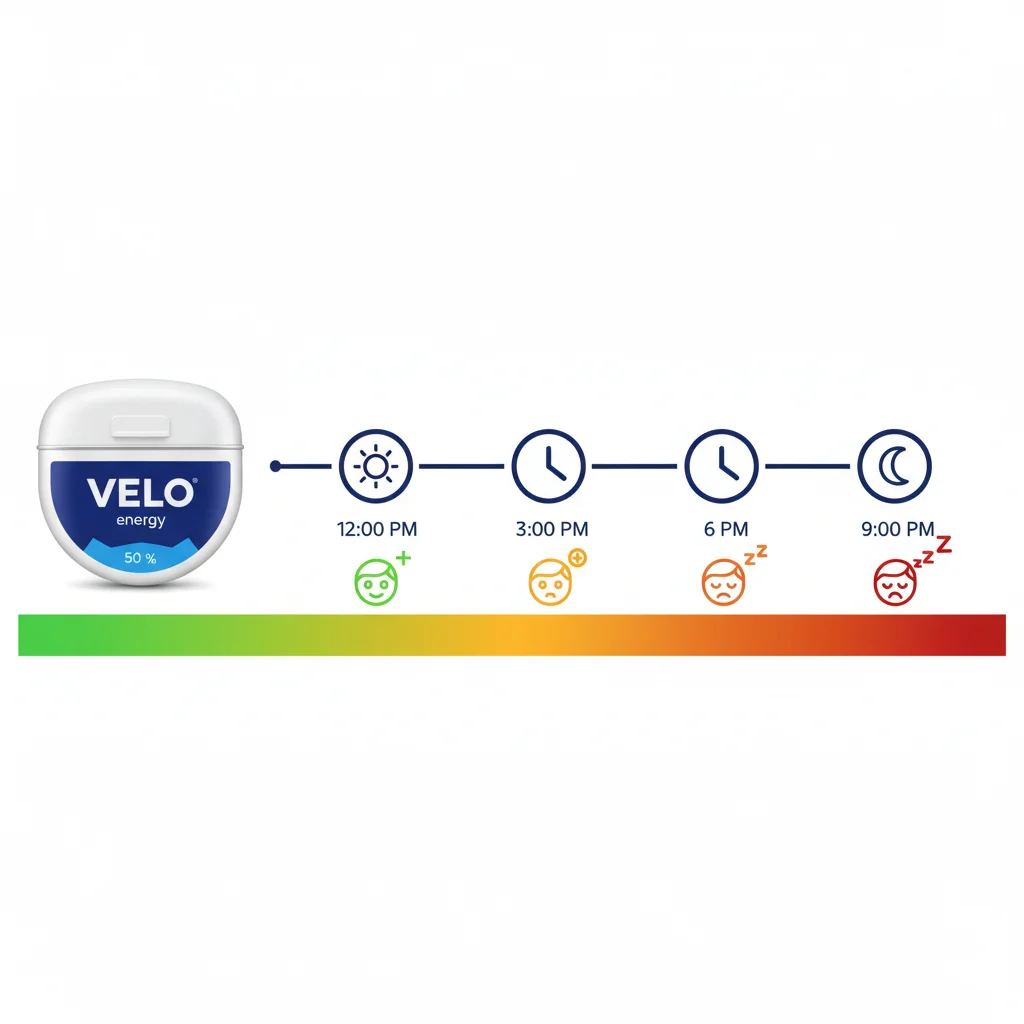
Caffeine has a half-life of approximately 5-6 hours in most adults, though this varies based on genetics, liver enzyme activity (specifically CYP1A2), body weight, and whether you smoke. Half-life means that 5-6 hours after using a pouch, half of that caffeine dose is still circulating in your system [2].
Here's what that looks like in practice:
| Pouch Use Time | Caffeine Dose | Amount Still Active at 10pm | Sleep Risk |
|---|---|---|---|
| 8am | 100mg | ~6mg (negligible) | Very Low |
| 12pm | 100mg | ~25mg | Low |
| 2pm | 100mg | ~50mg | Moderate |
| 5pm | 100mg | ~71mg | High |
| 7pm | 100mg | ~84mg | Very High |
The numbers make it clear. A 100mg pouch used at 7pm still has roughly 84mg active in your bloodstream at 10pm. That's nearly a full cup of coffee right at bedtime.
Individual Variation: Why Your Friend Can Sleep Fine and You Can't
Caffeine metabolism varies significantly between individuals. Slow metabolizers (carrying two copies of the CYP1A2*1F allele) can take up to 10 hours to clear half a caffeine dose. Fast metabolizers may clear it in 3-4 hours. Pregnancy, oral contraceptives, and certain medications also slow caffeine clearance considerably [2].
From experience working with customers across Europe, the most common complaint we hear about energy pouches is "I used one in the afternoon and couldn't sleep." In nearly every case, the issue is a 4pm-6pm use of a 100mg+ pouch by someone who is a slow metabolizer. The fix is almost always just moving the last pouch of the day earlier. This directly impacts caffeine pouches sleep effects outcomes.
Side Effects Beyond Sleep Disruption
Sleep disruption is the most common caffeine pouch side effect, but it's not the only one worth understanding. The faster absorption route that makes pouches effective also makes some side effects more pronounced than with traditional caffeine sources.
Physical and Neurological Side Effects
According to Ashley Addiction Treatment and reporting from Atrius Health, documented side effects of caffeine pouches include [1][4]:
- Elevated heart rate and blood pressure: Caffeine is a cardiovascular stimulant. A rapid dose can spike both, which is particularly notable in people with pre-existing heart conditions
- Jitteriness and restlessness: More likely with high-dose pouches (150mg+) or in caffeine-sensitive individuals
- Anxiety and irritability: Caffeine amplifies the stress response by increasing cortisol and adrenaline output
- Nausea and GI discomfort: Less common with pouches than with coffee (no stomach acid involvement), but still reported at high doses
- Gum irritation: Placing a pouch in the same spot repeatedly can cause localized irritation of the gum tissue
- Dependence and withdrawal: Regular high-dose caffeine use leads to receptor upregulation; stopping abruptly causes headaches, fatigue, and difficulty concentrating
As reported by MD Searchlight, one concern among clinicians is that the discreet format and easy dosing of caffeine pouches makes it straightforward to exceed 400mg per day (the upper limit recommended by the European Food Safety Authority) without realizing it [3].
The Sleep-Fatigue Cycle
There's a particularly unhelpful cycle that heavy caffeine pouch users can fall into. Poor sleep leads to more fatigue. More fatigue leads to reaching for another pouch. Later pouch use leads to worse sleep. Repeat. Emerald Pods describes this as "disrupted sleep cycles" being one of the five key risks of regular caffeine pouch use [5].
Breaking this cycle requires temporarily reducing caffeine intake and accepting a few days of natural tiredness while adenosine receptor sensitivity normalizes. It's not pleasant, but it's the only way to reset your baseline. This is particularly relevant for caffeine pouches sleep effects.
Pro Tip: If you're using caffeine pouches daily and still feeling tired by midday, that's a strong signal the product is masking accumulated sleep debt rather than providing genuine energy. Try a 5-day caffeine reduction before concluding that the pouches "don't work anymore."
Best Practices for Using Caffeine Pouches Without Ruining Your Sleep (2026)
Used correctly, caffeine pouches are a genuinely useful productivity tool. The key is treating them like a precision instrument rather than a vending machine snack.
The Core Rules for Sleep-Safe Use
As of 2026, the most current guidance from sleep researchers and nutrition scientists converges on a few clear principles. Apply these and you can get the energy benefit without the sleep cost:
- Set a hard cutoff time. Based on the 5-6 hour half-life, your last caffeine pouch of the day should be no later than 1-2pm if you plan to sleep by 10-11pm. For night owls sleeping at midnight, 3pm is the outer limit.
- Cap your daily dose at 400mg. This is the European Food Safety Authority's recommended upper limit for healthy adults. One 100mg pouch used three to four times before 2pm keeps you well within range.
- Choose pouches with L-theanine. The combination of caffeine and L-theanine (in a 2:1 ratio) produces calmer, more sustained focus with less of the anxious edge that makes it harder to wind down later.
- Don't use a pouch to compensate for bad sleep. If you slept five hours, a caffeine pouch will mask the tiredness but won't restore cognitive performance. Prioritize the sleep first.
- Rotate your pouch placement. To avoid gum irritation from repeated contact, alternate sides and positions within your lip rather than always placing the pouch in the same spot.
- Track your intake honestly. Unlike a cup of coffee, pouches are easy to use frequently without noticing how much you've consumed. If you're using more than three or four per day, that's worth reviewing.
Caffeine Pouches vs. Energy Drinks: Sleep Impact Comparison
| Factor | Caffeine Pouch | Energy Drink (250ml) | Filter Coffee (250ml) |
|---|---|---|---|
| Typical caffeine dose | 50-200mg | 80mg | 90-120mg |
| Absorption speed | Fast (buccal) | Moderate (GI) | Moderate (GI) |
| Sugar content | None (sugar-free) | 27g (standard) | 0g |
| Sleep disruption risk | High if used after 2pm | Moderate-High | Moderate |
| Dose control | Precise (labeled per pouch) | Moderate | Variable |
| Functional co-ingredients | L-theanine, B-vitamins, adaptogens | Taurine, B-vitamins | None |
| Discreet use | Yes | No | No |
One advantage caffeine pouches genuinely have over energy drinks is dose transparency. Each pouch has a labeled caffeine content, so you know exactly what you're taking. Energy drinks vary significantly between brands, and many people underestimate how much caffeine they've consumed across a day of multiple cans [4].
Pro Tip: Our team at DarePouch recommends treating your last caffeine pouch of the day the same way you'd treat your last coffee. If you wouldn't drink a double espresso at 5pm without expecting it to affect your sleep, don't use a 100mg pouch at 5pm either. The logic is identical.
Sources & References
- Ashley Addiction Treatment, "What Are Caffeine Pouches?", 2026
- Sleep Education (American Academy of Sleep Medicine), "Sleep and Caffeine: Benefits and Risks", 2026
- MD Searchlight, "Why Caffeine Pouches Alarm Parents & Doctors", 2026
- Atrius Health, "Why Nicotine and Caffeine Pouches Are Risky for All Ages", 2026
- Emerald Pods, "5 Shocking Facts: Are Caffeine Pouches Bad For You?", 2026
- Muse Pouches, "Caffeine Pouches and Sleep: How to Boost Energy Without Disruption", 2026
- YouTube / Medical Reporting, "Small Caffeine Pouches Can Carry Big Risks, Doctors Warn", 2026
Frequently Asked Questions
1. Do caffeine pouches have negative side effects?
Yes, caffeine pouches can produce side effects, particularly when used in high doses or late in the day. Because the caffeine is absorbed through the gum lining rather than the digestive system, the onset is faster and the peak effect more abrupt than with coffee. Common side effects include elevated heart rate, raised blood pressure, jitteriness, anxiety, nausea, and insomnia. At high doses (above 400mg per day), irregular heartbeat and significant sleep disruption become more likely. Gum irritation from repeated pouch placement is also a practical concern with daily use [1][4]. The key variable is dose and timing: most adults tolerate one or two pouches in the morning without issue.
2. Does caffeine negate ashwagandha?
Caffeine and ashwagandha don't cancel each other out, but they do work in opposing directions on the stress response. Caffeine stimulates the release of cortisol and adrenaline, while ashwagandha (an adaptogen) helps modulate and reduce cortisol over time. Using both together doesn't make either ineffective, but it does mean the calming effect of ashwagandha may be partially offset during the acute stimulant phase of the caffeine. There are no known dangerous interactions between the two. Some energy pouches intentionally combine caffeine with adaptogens like ashwagandha precisely to smooth out the stimulant curve and reduce the anxious edge that can otherwise disrupt evening wind-down routines. When considering caffeine pouches sleep effects, this point stands out.
3. What time should I stop using caffeine pouches to protect my sleep?
For most adults targeting a 10-11pm bedtime, the last caffeine pouch of the day should be no later than 1-2pm. This is based on caffeine's 5-6 hour half-life: a 100mg pouch used at 2pm still has roughly 50mg active in your system at 8pm. If you're a slow caffeine metabolizer (which you can determine through genetic testing or simply by noticing you're sensitive to afternoon coffee), move that cutoff to noon. Research from the American Academy of Sleep Medicine confirms that caffeine consumed six hours before bed meaningfully reduces total sleep time [2].
4. Are caffeine pouches worse for sleep than energy drinks?
The sleep impact depends more on total caffeine dose and timing than on the delivery format. However, because caffeine pouches absorb faster through the buccal mucosa than caffeine from a drink, the peak blood concentration arrives sooner. A high-dose pouch (150mg+) used in the afternoon may create a sharper, faster disruption to the adenosine signaling system than the same dose consumed as a drink. On the positive side, caffeine pouches are sugar-free, so they don't carry the additional blood sugar spike and subsequent crash that standard energy drinks produce, which can also interfere with sleep quality [6].
5. Can I use caffeine pouches every day without affecting my sleep long-term?
Daily use is manageable if you apply consistent timing and dose discipline. The risk isn't daily use per se, it's the gradual drift toward later and higher use that tends to happen over time. Tolerance builds with regular caffeine consumption, which typically leads people to use more and use it later in the day to maintain the same effect. That's the pattern that creates chronic sleep disruption. If you're using caffeine pouches every day, a practical rule is to reassess your intake every four to six weeks and take a 3-5 day break if you notice your sleep quality declining or your morning energy without caffeine getting worse [5].
6. Are caffeine pouches safe for teens?
No. Caffeine pouches are not appropriate for anyone under 18. The rapid absorption route, combined with the typically high caffeine doses in these products, poses particular risks for adolescents whose cardiovascular systems and neurological development are still maturing. As noted by Atrius Health, even moderate caffeine doses can cause irregular heartbeats and significant anxiety in younger users [4]. All caffeine pouch products at DarePouch are sold exclusively to adults aged 18 and over.

Conclusion
Caffeine pouches sleep effects are predictable, manageable, and largely avoidable with the right habits. The core science is straightforward: caffeine blocks adenosine receptors, delays sleep onset, reduces deep sleep, and has a half-life of 5-6 hours. Use a high-dose pouch late in the afternoon and you'll feel it at midnight. Use a moderate-dose pouch before 2pm, and your sleep is unlikely to suffer at all.
The faster absorption of buccal caffeine delivery means timing matters even more with pouches than with coffee. But that same precision works in your favor: because each pouch has a labeled dose, you can manage your intake far more accurately than you can with a variable-strength flat white.
If you're looking for energy pouches that include L-theanine, adaptogens, and B-vitamins alongside caffeine, DarePouch stocks a wide range of functional energy pouches from trusted brands, all stored in climate-controlled conditions to guarantee freshness. Whether you're new to the category or looking to optimize your current routine, the selection at DarePouch gives you the options to find the formulation that works for your schedule and your sleep.
Bottom line: caffeine pouches are a smart energy tool when used before 2pm at sensible doses. Push that boundary, and your sleep will push back.
Recommended Articles
Explore more from our content library:


